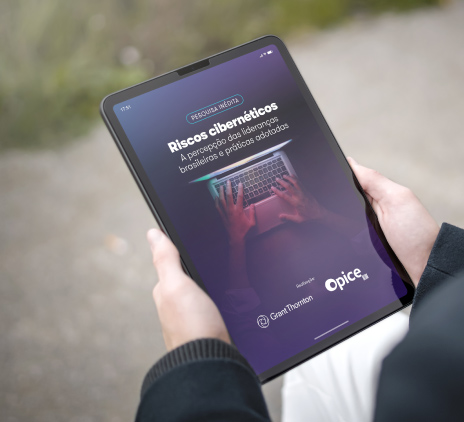
We invite you to take part in this survey carried out by Grant Thornton Brasil and Opice Blum, analyzing the perceptions of Brazilian company leaders and the cyber aspects that are essential to business.

The Women in Business 2025 edition identifies three key diversity factors and explores practical actions adopted with a positive impact on business performance. Access!
The U.S. Securities and Exchange Commission (SEC) adopted on March 6, 2024 some significant and highly anticipated climate-related disclosure requirements for public companies in their periodic disclosure reports and registration statements for public offerings (Final Rules).
In this International Indirect Tax Guide, we navigate through the global VAT, GST and sales tax landscape.
As large organizations continue to go public with their workforce approaches, those that haven’t made long-term strategy decisions surrounding their workforce policy will soon need to do so. The result is many business leaders ask us if there is a consensus when it comes to designing an optimal hybrid/remote workforce strategy. The only consensus is there is no consensus.
How do you turn data into insight? Carolyn Sansom explores the six key skills you need to draw insights from data analysis to drive better decision making.
Progress towards female equality in senior leadership is accelerated when men act as allies. Informed by Grant Thornton’s research into the global mid-market, this article reveals what being a male ally looks like, and outlines the practical steps businesses can take to drive action and remove the organisational and cultural barriers to male allyship.
As far back as twenty years ago, the Financial Accounting Standards Board (FASB) and International Accounting Standards Board (IASB) changed the accounting of goodwill that still brings passionate debate to this day.
When spending money to attract customers, business leaders must first prioritize who they are targeting – new customers or familiar faces. The conventional wisdom in most consumer businesses, especially the restaurant, hospitality and retail sectors, is that 80% of a business’s sales comes from the top 20% of its customers – the “80/20 rule.”
The European Commission has proposed a Corporate Sustainability Reporting Directive (CSRD) and as part of this will adopt EU Sustainability Reporting Standards (ESRS). The European Financial Reporting Advisory Group (EFRAG) has been asked to provide technical advice to the European Commission in the form of fully drafted sustainability reporting standards.
From reporting periods starting 2024 onwards, the Corporate Sustainability Reporting Directive (CSRD) will require all large companies to report on sustainability policy and performance.
Expert insights to enable you to navigate the risks and harness the growth opportunities of going global.
Clarity of purpose is obtained by simplifying decisions aligned to the organizational mission and by relentlessly focusing on delivering customer-centric experiences.
Before the pandemic, international business was mostly done through physical interactions – with people meeting in person to agree sales or receive a service. That changed with COVID-19. Grant Thornton’s research last year established that most international interactions currently take place virtually. It’s an important shift, and to better understand the implications of this new virtual world we spoke to Elaine Daly, global head of business consulting at Grant Thornton International Ltd.
Read our International Tax Newsletter from February.